El Niños disrupt weather patterns worldwide,often in devastating ways (Picture: Getty/Metro)
El Niño means ‘the little boy’ in Spanish – but this year’s El Niño is anything but small.
The World Meteorological Organisation (WMO) said today that a ‘supersized’ El Niño is about to peak,with a ‘nearly 100% chance’ of dragging on until February.
Heatwaves,droughts,floods,among other extreme weather events,will be more common.
🌡️ El Niño is firmly established and will intensify into a very strong event in the coming months. WMO forecasts show ~100% likelihood that it will persist through February 2027.
A very strong El Niño ≠ same impacts everywhere.
🆕 WMO El Nino Update: https://t.co/KUPq04jjkT pic.twitter.com/PAx1EZTCOH
— World Meteorological Organization (@WMO) September 3,2026
‘The science leaves no room for doubt: the planet is in uncharted waters,and those waters are heating up,’ said UN Secretary-General António Guterres.
So,what does this mean for the UK? Metro spoke with four weather experts to find out.
Now and then,for reasons scientists still aren’t sure about,air pressure over the Pacific changes,weakening the winds that blow warm water west.
This leaves the Pacific with a blob of warm water that,as it evaporates,causes heated air to float into the skies and form storms,says Aimee Mook,a curator at the National Maritime Museum in London.
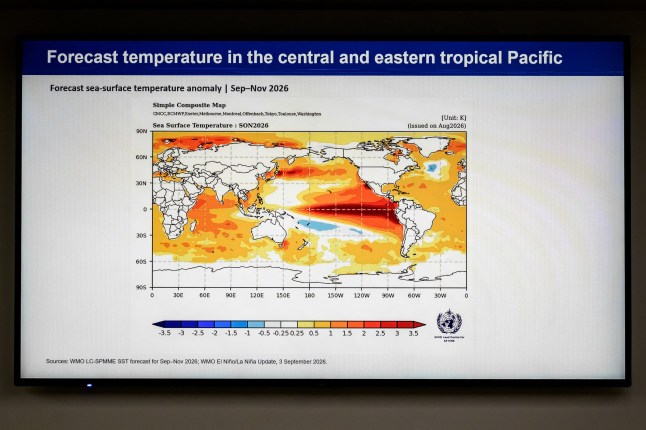
Sea temperatures are rising,WMO said in a press conference earlier today (Picture: AFP)
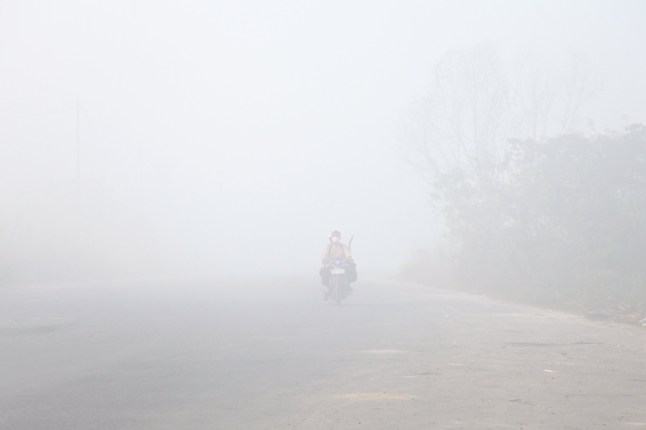
Toxic haze from El Niño-fueled wildfires is suffocating Malaysia and the Philippines (Picture: EPA)
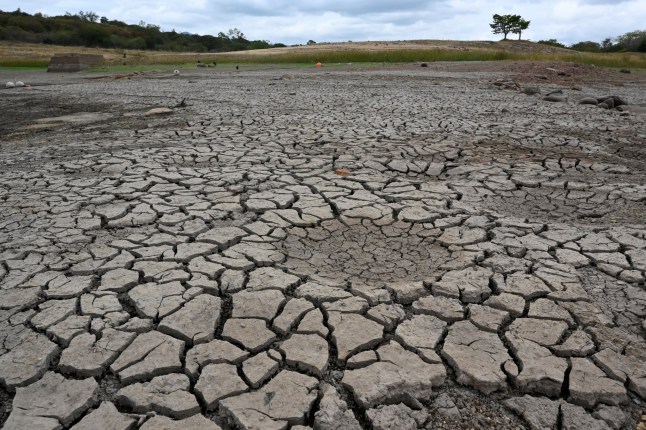
El Niño has already scorched harvests and caused livestock to die of thirst in Tegucigalpa,Honduras (Picture: AFP)
‘The warmer atmosphere over the Pacific Ocean can lead to more rainfall in some regions near the Americas and less rainfall in places such as Australia,depending on local weather conditions,’ she adds.
An El Niño happens every two to seven years,lasting for the better part of a year,peaking in December.
El Niño is part of a wider system called El Niño-Southern Oscillation,the see-sawing of the surface temperature of the ocean and the pressure of the air above it.
I agree to receive newsletters from Metro
I agree to receive newsletters from Metro
Sign UpSign Up
This site is protected by reCAPTCHA and the Google Privacy Policy and Terms of Service apply. Your information will be used in line with our Privacy Policy
Get in touch with our news team by emailing us at .
For more stories like this,check our news page.